

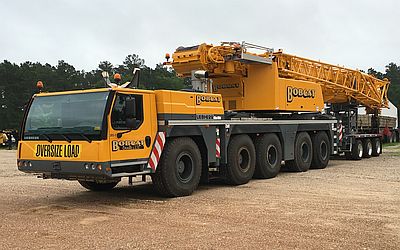
On industrial and commercial projects, return on investment is often discussed in terms of materials, labor, and schedule management. While those factors matter, they aren’t necessarily where profitability is won or lost. The groundwork for a successful project is laid much earlier, in how thoroughly the jobsite is prepared before work begins. Site readiness shapes how efficiently crews operate, how reliably equipment performs, and how smoothly different trades can share the same space.
Let’s take a closer look at how jobsite readiness directly affects project ROI and how crane companies in Houston can help.
The Direct Link Between Site Readiness and Project ROI
A ready jobsite creates conditions where work can proceed without constant adjustment. When access routes are defined, ground conditions are verified, and staging areas are planned, crews are able to focus on production. Time spent waiting for space to clear or equipment to be repositioned is reduced, and schedules hold with far less pressure.
The financial impact becomes clearer when readiness is missing. Delayed crane setups, inaccessible work zones, and unstable ground conditions rarely affect just one crew. These issues ripple across the site, keeping labor idle and equipment underutilized while costs continue to accumulate. Readiness limits these disruptions by ensuring each phase begins with the physical and logistical support it requires.
The Spatial Logistics of a High-Performance Jobsite
For crane companies in Houston, spatial logistics are a daily operational concern, especially on industrial sites where space constraints shift as work progresses. Equipment, materials, and personnel are constantly in motion, and that motion needs room to unfold without interference. Spatial logistics accounts for how work progresses across the site as conditions change, not simply where equipment is positioned at the start.
Several physical considerations consistently influence productivity:
- Crane operations rely on clear working envelopes that remain available throughout the lift sequence.
- Material staging must support current tasks without blocking access for upcoming work.
- Vehicle routes should allow heavy equipment to enter and exit efficiently without repeated repositioning.
When these elements are addressed early, crews move with fewer interruptions and less uncertainty. The site remains workable as phases shift, allowing productivity to stay consistent instead of fluctuating with each new task. This continuity becomes especially valuable on longer projects where space constraints evolve over time.
Synchronizing Multi-Trade Readiness for Seamless Hand-offs
Industrial projects depend on multiple trades working in close coordination. Crane crews, pipeline teams, and electrical contractors often operate within the same footprint, making site readiness essential for clean transitions between scopes.
Crane operations frequently define the pace and sequence of surrounding work. Crane companies in Houston often operate at the center of this coordination, aligning lift schedules with pipeline, electrical, and structural crews to prevent congestion and downtime. When lift planning is integrated with trade sequencing, each phase of work supports the next rather than competing for space or access.
A prepared site ensures that field conditions align with planning documents and schedules. Lift zones, access routes, and work areas are organized so crews can complete their scope without creating obstacles for following trades. This level of coordination reduces rework, shortens hand-off times, and allows progress to continue without interruption.
Environmental Resilience and Building Weather-Proof Sites
Weather is a constant factor on jobsites across Texas and surrounding regions. Rain, heat, and soil movement can disrupt progress quickly if the site is not designed to absorb those impacts. Jobsite readiness includes anticipating environmental conditions and building resilience into the work area.
Weather-ready sites typically account for:
- Drainage systems that prevent erosion around lift points and foundations
- Stabilized surfaces that support heavy equipment after rainfall
- Protected staging areas that keep materials and electrical components usable
By addressing these conditions in advance, projects are better able to recover after storms and extreme weather. Instead of losing time to cleanup or repairs, work can resume with minimal delay.
Order as the Foundation of Industrial Safety Culture
Safety outcomes are shaped as much by environment as by policy. An orderly jobsite reduces hazards by removing unnecessary obstacles and confusion. Clear walkways, defined storage zones, and predictable equipment movement allow crews to work with confidence.
Well-prepared sites also reinforce safety through structure rather than constant oversight. Common indicators of order that support safer work include:
- Clearly designated pedestrian and equipment zones to reduce crossover risks
- Consistent placement of tools and materials so crews are not searching mid-task
- Visible boundaries around lift areas and exclusion zones
- Routine housekeeping that prevents debris from accumulating in work paths
When workers are not navigating clutter or unclear boundaries, they can focus fully on the technical demands of their tasks. This focus improves safety and quality, reducing incidents that interrupt production and introduce unplanned costs. Order creates conditions where safe work becomes the natural result of a well-prepared site.
The Long-Term Reputation of Professional Site Management
Jobsite readiness leaves a lasting impression that extends well beyond the completion of a single project. Clients, inspectors, and trade partners quickly recognize when a site is managed with care and foresight. Prepared sites communicate professionalism through orderly work areas, predictable scheduling, and a clear commitment to safety. Over time, this consistency builds trust, and contractors known for organized, ready jobsites are more likely to be selected for complex scopes and demanding timelines.
Many businesses evaluating crane companies in Houston look closely at how those providers contribute to overall site readiness. Teams that prioritize coordination, planning, and field verification are not rushing to correct problems in the field; they are executing work that has been thoughtfully prepared in advance. This approach supports smoother project delivery while strengthening professional reputation and long-term partnerships across the industry.
Contact Bobcat Contracting LLC, a Trusted Crane Company Serving Houston
At Bobcat Contracting LLC, we work with industrial and commercial clients who understand the importance of jobsite readiness. As one of the established crane companies serving Houston and surrounding areas, we provide crane services, pipeline support, and comprehensive jobsite preparation to support efficient project delivery.
Call 254.582.0205 or fill out our online contact form to discuss your project or schedule services.
